
Essential Nutrient Roles
Understanding the fundamental functions of nutrients in sustaining basic life processes
Core Functions in Sustaining Life
Nutrients form the foundation of every biological process. They serve critical roles in energy production, cellular structure, and metabolic regulation. Water facilitates nutrient transport and maintains cellular hydration. Macronutrients provide both energy and structural components for tissues and organs. Micronutrients enable enzymatic reactions and maintain physiological balance essential for survival.
The interplay between different nutrient types ensures that our body can perform its fundamental life-sustaining functions. From the moment nutrients are consumed, a cascade of physiological processes begins, supporting everything from basic cellular operations to complex metabolic pathways.
Cellular Nourishment Basics
How nutrients support fundamental cellular operations
The Role of Nutrients at Cellular Level
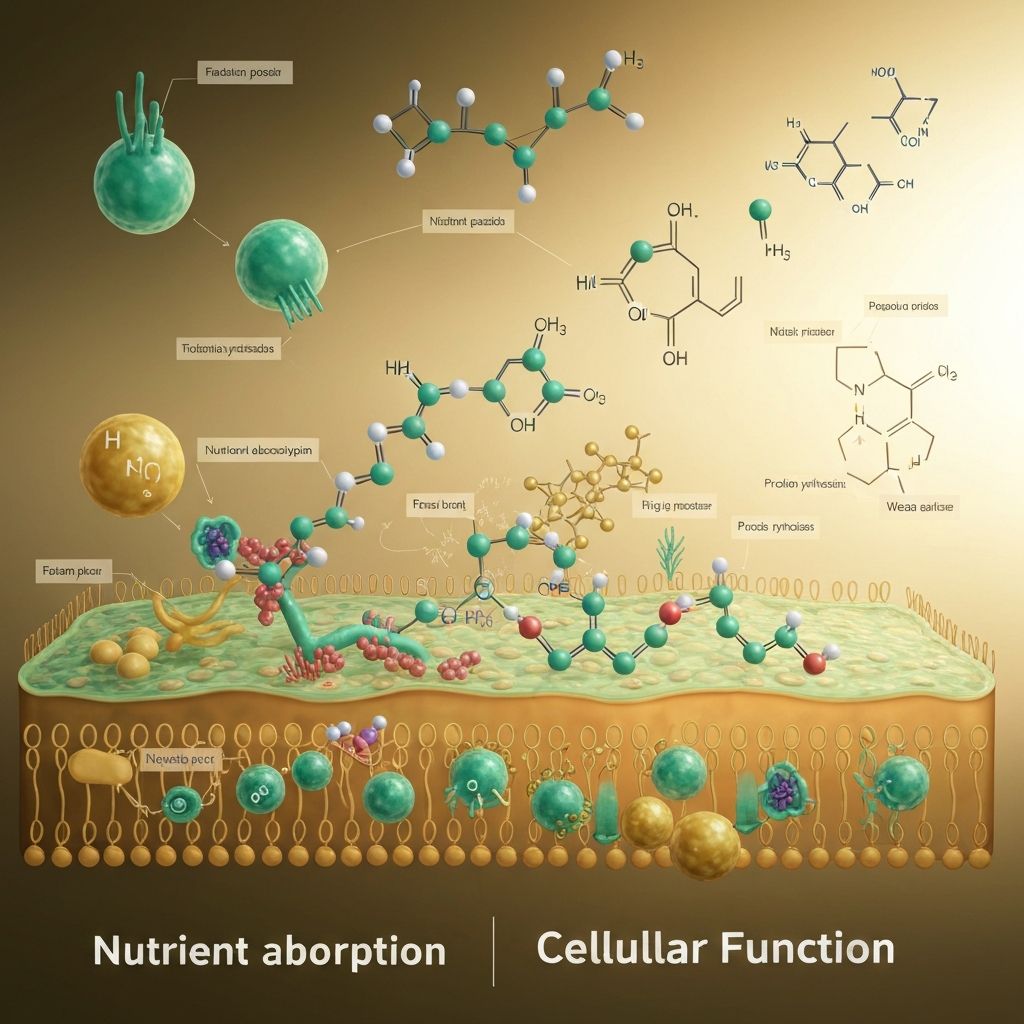
At the cellular level, nutrients serve as building blocks and energy sources. Amino acids assemble into proteins that form enzymes and structural elements. Carbohydrates and fats provide adenosine triphosphate (ATP), the universal energy currency. Vitamins and minerals act as cofactors in metabolic reactions, enabling cellular processes that sustain life.
Each cell requires a continuous supply of properly nourished substrate to maintain homeostasis. The cellular membrane selectively transports nutrients inward, where they participate in anabolic and catabolic pathways. This nutrient availability directly influences cellular viability and physiological function.
Absorption and Utilization
General physiological mechanisms of nutrient processing
From Intake to Cellular Integration
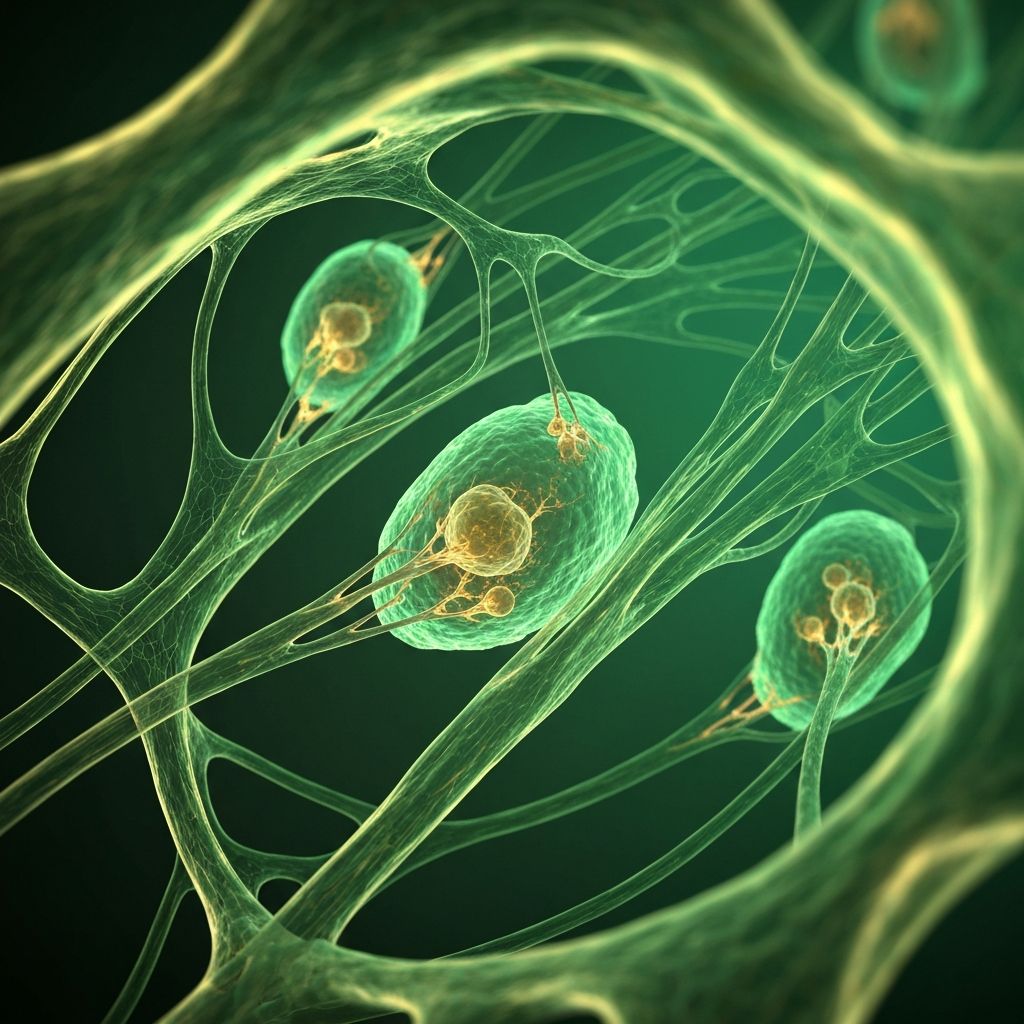
Nutrient absorption begins in the digestive tract, where mechanical and chemical processes break down complex food structures into absorbable components. The small intestine, with its extensive mucosal surface, facilitates nutrient transport into the bloodstream. This process requires specific transport mechanisms for different nutrient types.
Once absorbed, nutrients circulate through the vascular system to target tissues. Cellular uptake mechanisms ensure nutrients reach where they are needed. Different tissues have varying nutrient requirements based on their metabolic activity and physiological function. This distribution system maintains nutrient homeostasis across diverse organ systems.
Metabolic Integration and Storage
Beyond absorption and transport, nutrients undergo metabolic integration. The liver processes many absorbed nutrients, synthesizing essential compounds. Tissues extract nutrients based on immediate and long-term requirements. Some nutrients are stored for later use, while others are utilized immediately to sustain ongoing physiological processes.
The efficiency of utilization depends on overall nutritional status, metabolic state, and individual physiological factors. Adequate nutrient availability supports optimal cellular function and systemic health. Deficiency states can impair these processes, highlighting the importance of sufficient dietary nourishment.
Water and Hydration Science
The fundamental role of water in sustaining life processes
Water as the Foundation of Life
Water constitutes approximately 60% of adult body weight and is essential for virtually every physiological process. It serves as the medium for nutrient transport, waste removal, and cellular communication. Every metabolic reaction occurs in an aqueous environment, making water inseparable from life itself.
Hydration maintains cellular volume, regulates body temperature through perspiration, and cushions organs. The body's water-electrolyte balance directly influences nerve impulse transmission, muscle contraction, and cardiovascular function. Adequate hydration supports these processes at every moment of life.

Micronutrient Contributions
Overview of vitamins and minerals in daily sustenance
Vitamins and Minerals in Physiological Balance
Micronutrients, though required in small quantities, are critical for health and survival. Vitamins function as coenzymes and cofactors in metabolic pathways. Fat-soluble vitamins (A, D, E, K) and water-soluble vitamins (B complex, C) each play distinct roles in maintaining physiological homeostasis.
Minerals such as calcium, magnesium, iron, and zinc participate in bone structure, oxygen transport, immune function, and countless enzymatic reactions. Population-level studies consistently demonstrate associations between micronutrient intake and various health markers, though individual requirements vary significantly.

Macronutrient Balance Concepts
Energy and structural support from carbohydrates, proteins, and fats
Carbohydrates
Carbohydrates are the primary energy source for cellular metabolism. They provide glucose, the preferred fuel for the brain and red blood cells. Complex carbohydrates from whole grains and vegetables offer sustained energy release, while simple carbohydrates provide rapid glucose availability.
Proteins
Proteins are essential for building and maintaining tissue structure. Amino acids from dietary protein are incorporated into enzymes, hormones, and antibodies. The body cannot store amino acids like it stores carbohydrates and fats, making consistent dietary protein important for ongoing physiological needs.
Fats
Dietary fats provide concentrated energy and serve as structural components of cell membranes. Essential fatty acids cannot be synthesized by the body and must be obtained from food. Fats also facilitate absorption of fat-soluble vitamins and support hormonal function.
Featured Insights
Explore deeper into nourishment science

Core Nutrients for Cellular Life
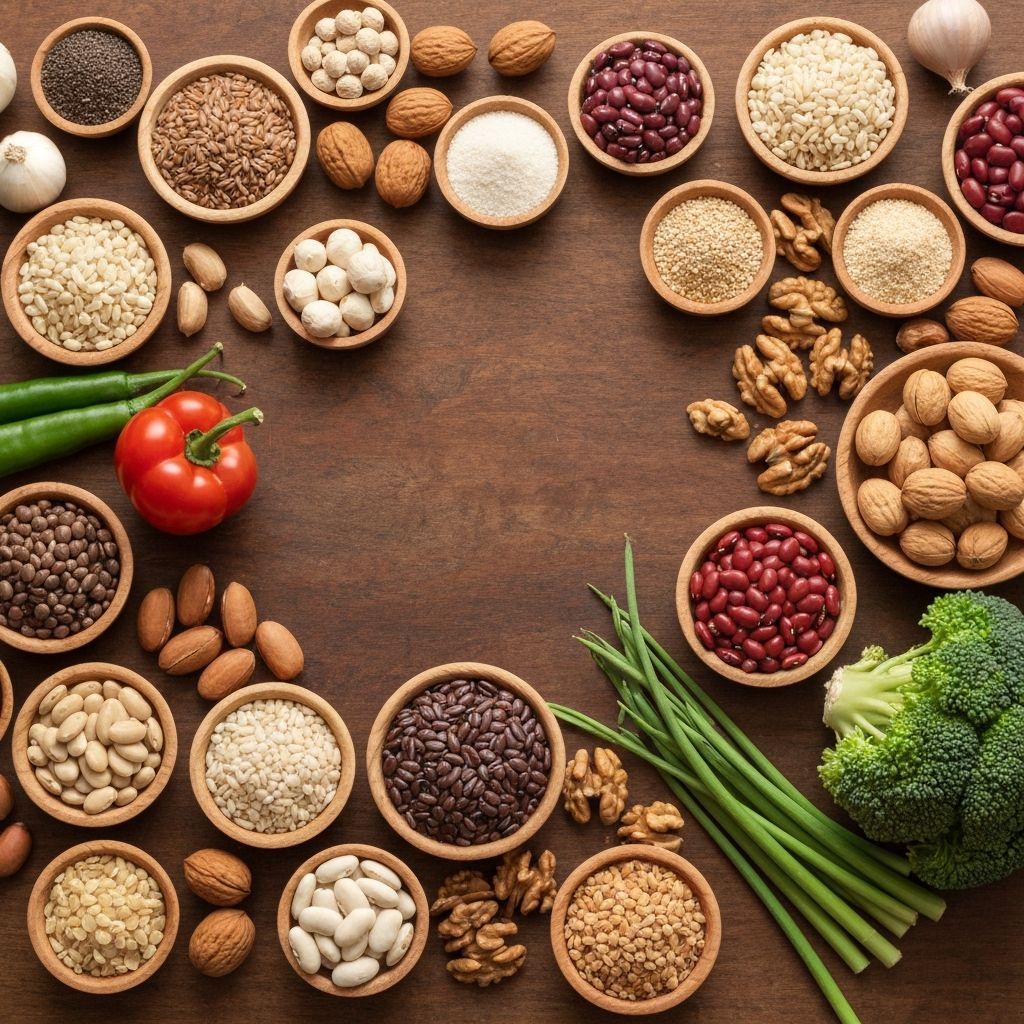
Explore the fundamental roles of essential nutrients and their contribution to cellular viability and function.
Read More
How Nutrients Reach the Cells
Understanding the physiological pathways through which nutrients are absorbed and transported to tissues.
Read More
Water: The Basis of Nourishment
Discover why water is the fundamental medium for all life-sustaining processes in the human body.
Read MoreNourishment FAQ
Common questions about nutrition essentials
Macronutrients are nutrients required in large quantities: carbohydrates, proteins, and fats. Carbohydrates provide energy; proteins build and repair tissues; fats support cellular function and hormone production. All three are essential for maintaining physiological processes.
Micronutrients (vitamins and minerals) are required in smaller quantities but are equally vital. While macronutrients provide energy and structure, micronutrients enable metabolic reactions, support immune function, and maintain various physiological processes. Deficiency in either category can impair health.
Water serves as the medium for nutrient transport, cellular hydration, and metabolic reactions. It regulates body temperature, removes metabolic wastes, and maintains the physiological environment necessary for cell survival. Without adequate water, nutrient absorption and utilization cannot occur effectively.
Nutrients are absorbed primarily in the small intestine through passive diffusion, active transport, and facilitated diffusion mechanisms. The extensive mucosal surface of the small intestine provides area for nutrient uptake. Different nutrients require specific transport mechanisms. Once absorbed, nutrients enter the bloodstream for distribution to tissues.
Cellular nourishment refers to the provision of nutrients to individual cells for energy production, structure maintenance, and metabolic function. Nutrients must cross the cell membrane through selective transport mechanisms. Once inside, they participate in biochemical reactions that sustain cell viability and function.
Yes, nutrient deficiency impairs cellular function. Without adequate nutrients, cells cannot produce energy, maintain structure, or perform specialized functions. Deficiency states can affect multiple organ systems. This underscores the importance of consistent nutrient supply through balanced nutrition.
Population-level nutrient intake varies significantly based on geography, food availability, cultural practices, and socioeconomic factors. Observational studies show patterns of intake and associations with various health markers, but individual nutritional needs depend on age, activity level, health status, and genetic factors.
Nutrient sufficiency refers to consuming adequate quantities of all essential nutrients to support normal physiological function. This threshold varies among individuals. Achieving sufficiency prevents deficiency states while supporting optimal cellular and systemic health.
Metabolic homeostasis is the body's ability to maintain stable internal conditions despite external changes. Adequate nourishment is essential for this balance. Nutrients enable regulatory mechanisms that maintain blood pH, glucose levels, electrolyte balance, and temperature. Nutrient availability directly supports homeostatic stability.
Continue Your Nourishment Journey
Explore the scientific foundations of nutrition and understand how nutrients sustain life.
Nourish Your Knowledge